U.S. flag

An official website of the United States government

Here’s how you know

Dot gov

Official websites use .gov
A .gov website belongs to an official government organization in the United States.

HTTPS

Secure .gov websites use HTTPS
A lock (LockA locked padlock) or https:// means you have safely connected to the .gov website. Share sensitive information only on official, secure websites.

  • Environmental Topics
  • Laws & Regulations
  • Report a Violation
  • About EPA
Contact Us

Grantee Research Project Results

Final Report: Simultaneous Concentration and Real-time Detection of Multiple Classes of Microbial Pathogens from Drinking Water

EPA Grant Number: R833006
Title: Simultaneous Concentration and Real-time Detection of Multiple Classes of Microbial Pathogens from Drinking Water
Investigators: Sobsey, Mark D. , Simmons, Otto D.
Institution: University of North Carolina at Chapel Hill
EPA Project Officer: Aja, Hayley
Project Period: October 18, 2006 through October 17, 2009
Project Amount: $599,999
RFA: Development and Evaluation of Innovative Approaches for the Quantitative Assessment of Pathogens in Drinking Water (2005) RFA Text |  Recipients Lists
Research Category: Drinking Water , Water

Objective:

This project investigated the development and performance characteristics of methods to rapidly and efficiently recover and detect enteric viruses, pathogenic bacteria and parasites in drinking water samples. The specific objectives were: 1) to evaluate the newly developed NanoCeram electropositive cartridge filter for primary concentration of viruses from water; 2) to refine and validate new and improved rapid methods to concentrate and detect viruses as well as cellular pathogens (bacteria and protozoan parasites) from waters of different quality, 3) to evaluate rapid PEG precipitation and large volume nucleic acid extraction as post-filtration sample preparation techniques to further concentrate viruses and remove inhibitors for efficient, specific and sensitive real-time, molecular detection of viral nucleic acids from human adenoviruses, enteroviruses and noroviruses; 3) to optimize direct detection of viral RNA/DNA by real-time polymerase chain reaction (RT-PCR) for rapid and efficient detection of low numbers of target viruses; 4) to develop complete protocols of the methods and provide them to a select number of other water virology laboratories to conduct a collaborative (round-robin) test of the methods that characterizes their performance; and 5) to apply the new performance-validated method and the standard EPA method to selected field samples of raw water to document that the new methods give superior performance.

Summary/Accomplishments (Outputs/Outcomes):

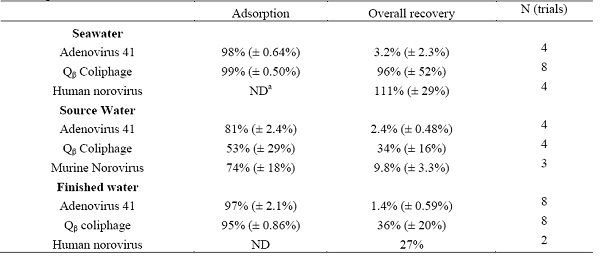
The NanoCeram cartridge filternow commercially available was evaluated as a primary concentration adsorbent filter for viruses in sea, source and finished water. Adsorption efficiencies of adenovirus and male-specific coliphages to the NanoCeram filter were high (>97%) from finished drinking water and from seawater. Viruses were eluted from the filters using a beef extract solution supplemented with 0.1 M of glycine at a pH of 9.5. For the efficient elution of norovirus and male-specific coliphages it was necessary to recirculate the elution buffer for 5 minutes with the aid of a peristaltic pump. The results on the adsorption and recoveries of viruses using the NanoCeram cartridge filter are presented in Table 1.

Table 1. Adsorption and recovery of viruses from different types of water using NanoCeram© cartridge filters.
The performance of continuous flow hollow fiber ultra filtration (HFUF) in the recovery of multiple classes of microbes was also intensively studied. Results demonstrated that the hollow fiber ultrafiltration procedure can effectively concentrate different types of microbes including viruses, bacteria and bacterial spores with recoveries > 50% (Table 2). The recoveries were similar in drinking source water and in drinking finished water.

Table 2. Microbial Recovery from Source and Dechlorinated Drinking Water Using HFUF with Lower Spikes of Microbial Indicators and Pathogens

    ND = No Data (eluting solution 2 with NaPP - toxic to cell culture)
    Blank recoveries = <1%
    Recovery percentage data for average and standard deviation
    High versus low spike concentration Source Water Mann-Whitney p=0.6141 – No difference
    High versus low spike concentration Drinking Water Mann-Whitney p=0.4494 – No difference

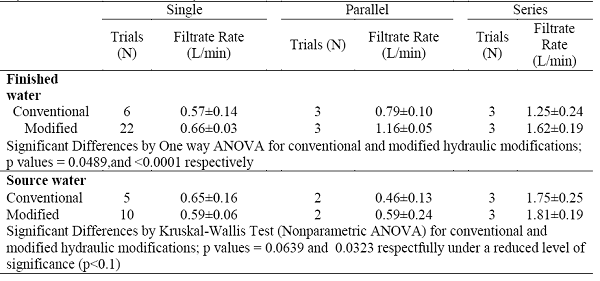
Modifications to the ultrafiltration flow patterns, such as the use of modified end-caps on the filter cartridge to increase inlet and outlet opening surface areas (cross-sections) and flux and the use of multiple filters in serial and parallel format, was investigated. No significant difference was found in the recovery of microbes using the different hydraulic modifications of ultrafiltration. However, the use of modified end-caps on the filter cartridge and the use of multiple HFUFs in serial format resulted in improved flow rates for the processing of drinking source water and drinking finished water (Table 3).

Table 3. Filtrate Rates of Fresenius F200A Ultrafilters in OWASA Treated Waters with Different Hydraulic Modifications to the System
Polyethylene glycol (PEG) precipitation was optimized for the recovery of multiple classes of viruses and found to be a robust secondary concentration step for different eluants solutions and types of waters. A complete concentration method was demonstrated using adsorption-elution and PEG precipitation or using HFUF-PEG precipitation (Table 4).

Table 4. Performance of complete methods for the concentration of viruses from water

Table 4. Performance of complete methods for the concentration of viruses from water

A Guanidinium thiocyanate (GuSCN) extraction method was demonstrated to be effective in the co-purification of nucleic acids from DNA and RNA viruses. In addition, different treatments were evaluated for the removal of inhibitory compounds from the concentrated samples facilitating sensitive viral detection. Although some treatments were very efficient in eliminating PCR inhibitory compounds from the concentrated samples, the selection of specific treatments to remove or overcome such inhibitors will depend on the nature of the sample and the type of virus being detected. No single method or set of methods for reducing sample inhibition of quantitative PCR was equally effective for both adenoviruses and noroviruses.

Conclusions:

The NanoCeram cartridge filters were found to be a highly efficient primary concentration method for male-specific coliphages and norovirus in large volumes of seawater. The advantages of the NanoCeram cartridge filter are its much lower price and its smaller size than the current standard EPA-approved electropositive cartridge filter. One can now filter the water in the field to concentrate viruses more conveniently and at lower cost than the currently approved filter. HFUF ultrafiltration was found to be an effective alternative primary concentration method and able to achieve universal concentration of not only viruses but also bacteria and bacterial spores from source and finished drinking waters. Hydraulic modification of the ultrafilters, such as using modified end-caps with greater inlet and out cross-sectional area on the filter cartridge and using multiple filters in series format increases the flow rate, resulting in shorter filtration times for large volumes of source and finished drinking waters. The advantage of HFUF is that microbial recovery effectiveness is not greatly affected by water conditions such as pH and turbidity. The main disadvantage is that the system is not as portable as the electropositive adsorbent filter for viruses. Therefore, the sample water typically needs to be shipped to a laboratory, resulting in extra time to process and analyze the sample before results are obtained and high shipping costs if large volumes of water are to be analyzed. PEG precipitation was found to be a robust and effective secondary concentration step for viruses. The combined use of NanoCeram filters with PEG precipitation can concentrate the water ~6,000 times and the use of HFUF with PEG precipitation can concentrate drinking water ~1000 times for sensitive detection of viruses from large volumes of water using real-time PCR. PCR inhibitors of virus detection in samples concentrated by both methods potentially can be reduced by treatments such as column chromatography and chloroform extraction, but no single method or set of conditions was found to be optimum for different viruses.

References:

Abbaszadegan M, Huber MS, Gerba CP, and Pepper IL. 1993. Detection of enteroviruses in groundwater with the polymerase chain reaction. Appl. Environ. Microbiol. 59:1318-1324
Bae, J. and Schwab, K. J. (2008). Evaluation of murine norovirus, feline calicivirus, poliovirus, and MS2 as surrogates for human norovirus in a model of viral persistence in surface water and groundwater. Appl Environ Microbiol 74, 477-484.
Boom, R., Sol, C. J., Salimans, M. M., Jansen, C. L., Wertheim-van Dillen, P. M. and van der Noordaa, J. (1990). Rapid and simple method for purification of nucleic acids. J Clin Microbiol 28, 495-503.
Chen W, Westerhoff P, Leenheer J, and Booksh K. 2003. Fluorescence excitation-emission matrix regional integration to quantify spectra for dissolved organic matter. Environ. Sci. Tech. 37:5701-5710.
Dong, Y., Kim, J., and Lewis G.D. (2010) Evaluation of methodology for detection of human adenoviruses in wastewater, drinking water and stream water and recreational waters. J. Appl. Microbiol. 108:800-809
Enriquez, C. E. and Gerba, C. P. (1995). Concentration of enteric adenovirus 40 from tap, sea and waste water. Water Res 29, 2554-2560
Fong TT and Lipp EK. 2005. Enteric viruses of humans and animals in aquatic environments: health risks, detection, and potential water quality assessment tools. Microbiol. Mol. Biol. Rev. 69:357-371
Francy, D. S., O. D. Simmons, 3rd, et al. (2004). "Effects of seeding procedures and water quality on recovery of Cryptosporidium oocysts from stream water by using U.S. Environmental Protection Agency Method 1623." Appl Environ Microbiol 70(7): 411828.
Grabow, W.O.K. M.B. Taylor and J.C. de Villiers (2001) New methods for the detection of viruses: call for review of drinking water quality guidelines Water Science & Technology 43(12): 1–8
Gu Z, Belzer SW, Gibson CS, Bankowski MJ, and Hayden RT. 2003. Multiplexed, real-time PCR for quantitative detection of human adenovirus. J. Clin. Microbiol. 41:4636-4641.
Hernandez-Morga J, Leon-Felix J, Peraza-Garay F, Gil-Salas BG, Chaidez C. (2009) Detection and characterization of hepatitis A virus and Norovirus in estuarine water samples using ultrafiltration--RT-PCR integrated methods J Appl Microbiol. 106(5):1579-90
Hill, V. R., A. L. Polaczyk, et al. (2005). "Development of a rapid method for simultaneous recovery of diverse microbes in drinking water by ultrafiltration with sodium polyphosphate and surfactants." Appl Environ Microbiol 71(11): 6878-84
Holowecky P.M., James, R.R., Lorch D.P., Straka, S.E. and Lindquist, H.D.A. (2009) evaluation of ultrafiltration cartridges for water sampling apparatus. J appl. Microbiol. 106:738-747
Jones T.H., Johns M.W. (2009) improved detection of F-specific RNA coliphages in fecal material by extraction and polyethylene glycol precipitation Appl. Environ. Microbiol. 75(19):6142-6
Jothikumar N, Cromeans TL, Sobsey MD, and B.H. Robertson (2005) Development and Evaluation of a Broadly Reactive TaqMan Assay for Rapid Detection of Hepatitis A Virus. Appl Environ Microbiol. 2005 Jun;71(6):3359-63.
Jothikumar N., Cromeans, T.L., Hill, V.R., Lu, X., Sobsey, M.D., and D.D. Erdman (2005) Quantitative real-time PCR assays for detection of human adenoviruses and identification of serotypes 40 and 41. Appl Environ Microbiol. 2005 Jun;71(6):3131-6
Juliano, J. J. and M. D. Sobsey (1998). Simultaneous concentration of Cryptosporidium, bacteria and viruses from water by hollow fiber ultrafiltration. Water Quality Technology Conference, Denver, CO, American Water Works Association.
Karim, M. R., Rhodes, E. R., Brinkman, M., Wymer, L. and Shay Fout, G. (2009). New Electropositive filter for concentration enteroviruses and noroviruses from large volumes of water. Appl Environ Microbiol 75, 2293-2399
Kim HY, Kwak IS, Hwang IG, Ko G (2008) Optimization of methods for detecting norovirus on various fruit. J Virol Methods. 153(2):104-110.
Kirs, M. and Smith, D. C. (2001). Multiplex quantitative real-time reverse transcriptase PCR for F+-Specific RNA coliphages: a method for use in microbial source tracking. Appl Environ Microbiol 73, 808-814.
Ko, G., N. Jothikumar, et al. (2005). "Rapid detection of infectious adenoviruses by mRNA real-time RT-PCR." Journal of Virological Methods 127: 148-153
Ko, G., Cromeans, T.L., Sobsey, M.D. (2003) Detection of infectious adenovirus in cell culture by mRNA reverse transcription-PCR. Appl. Environ. Microbiol. 69:7377-7384
Kuhn, R. C. and K. H. Oshima (2001). "Evaluation and optimization of a reusable hollow fiber ultrafilter as a first step in concentrating Cryptosporidium parvum oocysts from water." Water Res 35(11): 2779-83.
Kuhn, R. C. and K. H. Oshima (2002). "Hollow-fiber ultrafiltration of Cryptosporidium parvum oocysts from a wide variety of 10-L surface water samples." Can J Microbiol 48(6): 542-9.
Libes S. 1992. An introduction to marine biogeochemistry. Wiley, NY: 368-480.
Lukasik, J., Scott, T. M., Andryshak, D. and Farrah, S. R. (2000). Influence of salts on virus adsorption to microporous filters. Appl Environ Microbiol 66, 2914-2920
Morales-Morales, H. A., G. Vidal, et al. (2003). "Optimization of a reusable hollow-fiber ultrafilter for simultaneous concentration of enteric bacteria, protozoa, and viruses from water." Appl Environ Microbiol 69(7): 4098-102
Mullendore, J. L., M. D. Sobsey and Y.-S. C. Shieh. 2001. Improved method for the recovery of hepatitis A virus from oysters. J. Virol. Methods 94:25-35.
Nelson DW and Sommers LE. 1982. Total carbon, organic carbon, and organic matter, p. 539-597. In AL Page, RH Miller, and DR Keeney (ed.), Methods of soil analysis. Soil Science Society of America, Inc., Madison, Wis
Schwab, K.J., R. De Leon and M.D. Sobsey (1995) Concentration and purification of beef extract mock eluates for water samples for the detection of enteroviruses, hepatitis A virus and Norwalk virus by reverse transcription-PCR, Appl. Environ. Microbiol., 61(2):531-537.
Simmons, O. D., III, M. D. Sobsey, et al. (2001). "Concentration and detection of cryptosporidium oocysts in surface water samples by method 1622 using ultrafiltration and capsule filtration." Appl Environ Microbiol 67(3): 1123-7.
Sobsey, M.D. and J.S. Glass (1984) Influence of Water Quality on Enteric Virus Concentration by Microporous Filter Methods, Appl. Environ. Microbiol., 47:956 960.
Sobsey, M.D. and T. Cromeans (1985) Effects of bentonite clay solids on poliovirus concentration from water by microporous filter methods, Appl. Environ. Microbiol., 49:795 798.
Sobsey, M.D., J.S. Glass and R.S. Moore (1981) Evaluating Adsorbent Filter Performance for Enteric Virus Concentrations in Tap Water, J. Amer. Water Works Assoc. 73:542-548.
Sobsey, M.D., R.J. Carrick and H.R. Jensen (1978) Improved Methods for Detecting Enteric Viruses in Oysters, Applied and Environmental Microbiology 36:121-128.
Tepper, F. and Kaledin, L. (2007). Virus and protein separation using nano alumina fiber media. Retrieved June 13, 2008, from http://www.argonide.com/Paper%20PREP%2007-final.pdf
Tsai Y, and Olson B. 1992. Rapid method for separation of bacterial DNA from humic substances in sediments for polymerase chain reaction. Appl. Environ. Microbiol. 58:2292-2295.
Vilagines, P., Sarrette, B., and R. Vilagines (1988) Continuous detection of poliovirus in public water supplies. C R Acad Sci III. 307(4):171-6.
Vilagines, P., Sarrette, B., Husson, G. and R. Vilagine`s (1993) Glass wool virus concentration at ambient water pH level. Water Sci. Technol., 27, 299–306.


Journal Articles on this Report : 1 Displayed | Download in RIS Format

Publications Views
Other project views: All 4 publications 1 publications in selected types All 1 journal articles
Publications
Type Citation Project Document Sources
Journal Article Gibbons CD, Rodriguez RA, Tallon L, Sobsey MD. Evaluation of positively charged alumina nanofibre cartridge filters for the primary concentration of noroviruses, adenoviruses and male-specific coliphages from seawater. Journal of Applied Microbiology 2010;109(2):635-641. R833006 (Final)
  • Abstract from PubMed
  • Abstract: Wiley Online Library
    Exit
  • Supplemental Keywords:

    Human viruses, Adenovirus, Norovirus, Concentration Large volumes of water, Real-time PCR, Universal Concentrator, RFA, Scientific Discipline, Water, Environmental Chemistry, Drinking Water, Environmental Engineering, microbial contamination, ultrafiltration, contaminant candidate list, contaminant removal, pathogens, drinking water contaminants, drinking water treatment, drinking water monitoring, CCL, detection

    Progress and Final Reports:

    Original Abstract
  • 2007 Progress Report
  • 2008
  • Top of Page

    The perspectives, information and conclusions conveyed in research project abstracts, progress reports, final reports, journal abstracts and journal publications convey the viewpoints of the principal investigator and may not represent the views and policies of ORD and EPA. Conclusions drawn by the principal investigators have not been reviewed by the Agency.

    Project Research Results

    • 2008
    • 2007 Progress Report
    • Original Abstract
    4 publications for this project
    1 journal articles for this project

    Site Navigation

    • Grantee Research Project Results Home
    • Grantee Research Project Results Basic Search
    • Grantee Research Project Results Advanced Search
    • Grantee Research Project Results Fielded Search
    • Publication search
    • EPA Regional Search

    Related Information

    • Search Help
    • About our data collection
    • Research Grants
    • P3: Student Design Competition
    • Research Fellowships
    • Small Business Innovation Research (SBIR)
    Contact Us to ask a question, provide feedback, or report a problem.
    Last updated April 28, 2023
    United States Environmental Protection Agency

    Discover.

    • Accessibility
    • Budget & Performance
    • Contracting
    • EPA www Web Snapshot
    • Grants
    • No FEAR Act Data
    • Plain Writing
    • Privacy
    • Privacy and Security Notice

    Connect.

    • Data.gov
    • Inspector General
    • Jobs
    • Newsroom
    • Open Government
    • Regulations.gov
    • Subscribe
    • USA.gov
    • White House

    Ask.

    • Contact EPA
    • EPA Disclaimers
    • Hotlines
    • FOIA Requests
    • Frequent Questions

    Follow.