


Grantee Research Project Results
Final Report: Development, Design and Consumer Testing of Marketable Residential LED Light Luminaires
EPA Grant Number: SU833557Title: Development, Design and Consumer Testing of Marketable Residential LED Light Luminaires
Investigators: Anneberg, Lisa , Means, Janice K. , Feng, Jin , Shih, Kelvin , Walters, Filza , Boos, Nathan , Crotty, Jennifer , Cuchetti, Carl , George, Joseph , Graysmark, Allison , Grodzicki, Richard , Koenig, Jordon , Morency, Ray , Posigian, David , Scheuerman, Joseph , Trudell, Jesse , Westman, Clarice
Institution: Lawrence Technological University
EPA Project Officer: Page, Angela
Phase: I
Project Period: August 31, 2007 through July 31, 2008
Project Amount: $9,535
RFA: P3 Awards: A National Student Design Competition for Sustainability Focusing on People, Prosperity and the Planet (2007) RFA Text | Recipients Lists
Research Category: Pollution Prevention/Sustainable Development , P3 Awards , P3 Challenge Area - Sustainable and Healthy Communities , Sustainable and Healthy Communities
Objective:
Demonstrate the ecological, economic and lighting advantages of producing attractive LED luminaires to benefit the public and the environment, and to create a new market.
Summary/Accomplishments (Outputs/Outcomes):
This grant was supported by multiple, collaborative and diverse student projects. Two prototype LED lighting luminaires were designed and constructed. One fluorescent luminaire was successfully retrofitted with LED lamps. A variety of investigations were performed to determine the effects of driver currents and junction temperature on LED lamp longevity and how to control LED lamps such that they could be dimmed. Lighting effects on people using technology were analyzed and solutions were proposed involving the use of developed LED desk luminaires. Two student projects were performed by students in the College of Architecture and Design (CoAD) and four senior projects were performed by students in the Electrical and Computer Engineering (ECE) Department within the College of Engineering (CoE).
The student researchers successfully accomplished the objectives of demonstrating the ecological, economic and lighting advantages of producing attractive LED luminaires to benefit the public and the environment (people and the planet). They have also extended their knowledge base for LEDs.
The student and faculty researchers gained research experience, increased their technical abilities, and improved their personal knowledge base for sustainable lighting alternatives, lighting requirements and specifications for use, design and application of lamps and luminaires—particularly with regard to light emitting diodes (LEDs). Engineering students additionally gained a deeper understanding of the power requirements for LED lamps, LED construction, industrial applications, the dependence of LED life on junction temperatures within each LED and the importance of adequate heat sinks, and the particularities of LED drivers.
Perhaps the greatest immediate benefit to the students involved with these projects was that it improved the students’ employability in Southeastern Michigan, the state currently having the greatest unemployment rates in the nation (increase in prosperity and benefit to people). Today’s employers are demanding employees who are not only aware of sustainability issues, but have the knowledge and skills to assist their companies in developing new sustainable products (which is demonstrated in part by these research projects), meeting new regulations, and enhancing their company’s reputation as being ‘green’.
Although the team had planned to conduct and discuss findings from a marketing survey, this component was not able to be completed due to the length of time between when the proposal was initially written, award of the grant, and receipt of grant funds. This is predominately due to the fact that the study was designed to take place in a structure owned by the University that was sold in the interim.
In addition, since the start of this research grant, significant advances have been made, and changes have developed in the availability, technology, and complexity of LEDs. The market has drastically matured and changed within the last year as consumers have seen LED lamps installed and retrofitted into street lamps, marketed and available as screw-in lamps (into the space of an incandescent lamp), and commercially available. LED luminaires today can be purchased from department stores, and are extensively used for holiday decorations and building illumination, as in New York City’s Time Square.
Following are the highlights and a compilation of information and research results from the various projects made possible and completed under this grant.
Projects 1 & 2: “E101 Analysis” & “LED Luminaire Development”
Three graduate architecture students analyzed poor lighting conditions related to the use of a data projector in a room either too dark for note taking (with overhead fluorescent luminaires off) or too bright for screen viewing of presentations (with overhead luminaires turned on). They developed a contrast study analysis method and made recommendations for task lighting at each desk. A computer science student followed up by designing and constructing a light-weight battery-powered, LED luminaire which could be mounted on each desk to provide appropriate task lighting without interfering with data projector viewing and eliminating the need of extensive wiring.
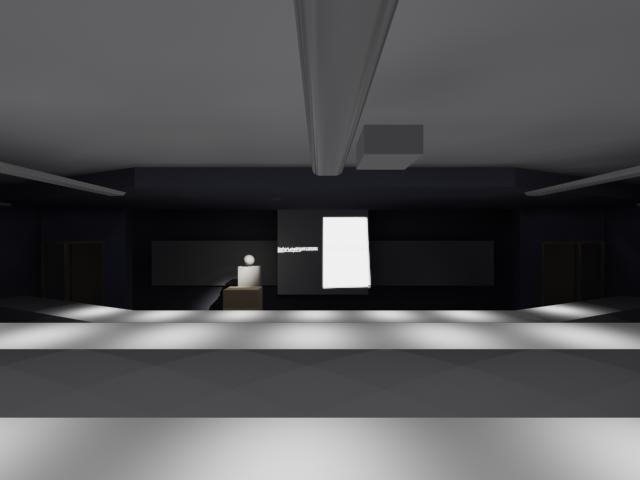
Figure 1: Simulated lighting effect of the proposed few footcandles can have a big impact oncontrast.

Figure 2: Pseudo-color rendering version with proposed table mounted task lights.

Figure 3: This figure demonstrates that only a table mounted task lights.

Figure 4: Diagram of LED luminaire
Project 3: "T8 - LED Replacement Lamp"
Three senior electrical engineering students retrofitted an existing commercial fluorescent luminaire with LED lamps while maintaining the usability of the luminaire for the same application for which it was designed. There are clear advantages to using LED lamps over fluorescent lamps since they have greater efficacies and longer expected lifetimes than fluorescent lamps and do not contain toxic substances. LED lamps cannot be simply installed in luminaires designed for fluorescent lamps. This challenged the students with the following technical issues:
- finding an appropriate current driver for the LED lamps
- providing sufficient heat dissipation since LED life is greatly reduced with excessive heat gain
- providing optimum voltage regulation (primarily for the ballast)
- finding LED lamps which would produce the same quality and quantity light as produced by the originally installed fluorescent lamps.
Three 32-watt LED lamps were installed successfully into the luminaires. Each luminaire originally produced 2900 lumens. The LED lamps used were Cree XLamp XP-E, having the following rated specifications: 0.35 A, 3.2 v, 115 degree angle, 1.14 watts producing 114 lumens. Each luminaire thus produced 3648 lumens (32 lamps x 114 lumens/lamp).
Project 4: “Electro Mechanical Desk Lamp”
A senior electrical engineering student designed and constructed a desk luminaire using three 6 – 4 VDC, 350 mA LEDs producing about 70 lumens. High-intensity white LED’s were selected as the light source because of their low power consumption, and long useful life. The LED’s shall not require replacement throughout the life of the product.
The luminaire is powered by three AA Nickel Metal Hydride (NiMH) rechargeable batteries. Unique to this design is the mechanical to electrical power generation using a hand crank for recharging the system. Recent power outages and natural disasters are the primary motivation for the project, people who enjoy camping would also benefit from this product. In order to fully charge the battery pack, an auxiliary DC input jack will be provided to trickle charge the battery pack in roughly 20 hours, at a low rate (approximately 0.05C) that will prolong battery life and increase performance.
Project 5: “LED Junction Temperature and Its Life Expectancy”
A senior electrical engineering student, with the assistance of Professor Kelvin Shih, developed a method to better determine the life expectancy of high power LEDs by measuring both junction temperature and brightness simultaneously. This was determined for both individual LEDs and groups of LEDs configured into luminaires.
The life expectancy of LEDs is directly related to junction temperature which is usually difficult to measure without specific instrumentation. The junction temperature is used to calculate the thermal resistance of the LED or LED system. The thermal resistance, in turn, will help determine the life expectancy. The data acquired from measuring the junction temperature can also help find the light depreciation of an LED.
A secondary power supply was used as a separate current source to compare single LEDs’ thermal resistance with that of groups of LEDs. The light sensor apparatus is a light sensor chip mounted inside a six inch tube painted black. This was developed to isolate the light from the outside to provide more accurate light intensity readings. Its black finish reduces the amount of light bouncing within the tube. The tube sensor connects to a computer for data collection and storage. This was accomplished using a PIC processor interfacing into a PC via USB connection.

Figure 5: Testing LED System (Assembled Lamp)

Figure 6: Diagram of equipment set up.
This project is expected to encourage the market for applications where large numbers of high power LEDs can be operated at a reduced energy cost.
Project 6: “Interior/Exterior Lighting Power Management System”
This senior electrical engineering student project is based on the Luxeon Star LED light system. The system utilizes a PIC microprocessor to detect and determine the voltage of the battery system. It is capable of dimming the lights when voltage is low as well as switching to AC power in an emergency, thus demonstrating how LED luminaire system outputs can be tailored to meet ever changing conditions.
Conclusions:
LED lamp and luminaire manufacturers have made great advances in the construction, assembly, design, and marketing of LED products in the last three years.
At the time of the proposal, there were less than a handful of LED luminaires produced and most of them were very costly and not thought to be viable contenders with luminaires using more conventional lamp types like incandescent and fluorescent when compared on illumination levels and light quality. LED luminaires were scarce and those available were expensive and didn’t perform well. LED lamps were available, but normally only for holiday decorations, installed in flashlights, or used in other insignificant ways. In the time span between when the proposal was written and when the grant was finished, lighting manufacturers made huge strides in developing more practical luminaires and there were also many developments in LED lamps. Examples of advancements include: manufacture of viable commercial luminaires for offices and street luminaires meeting the lighting requirements of IESNA standards through the use of multiple LED lamps with over ten times the amount of illumination of the original 5 mm round LEDs from the 1990s; screw-in LED replacement lamps; and the development of RGB LEDs which have changeable colors which can be remotely operated. Availability to ordinary consumers is also greatly improved. Many LED luminaires and lamps no longer need to be special ordered, e.g., screw-in LED replacement lamps and LED luminaires are now available even at discount department stores.
LED lamp lifetimes depend on several environmental factors including temperature, electrical current, humidity, radiation (visible wavelengths and other), chemical and mechanical.
LED lamps and luminaires have high first costs. The justification for using LEDs is that their life cycle cost should be lower than that for other lamps. Therefore, they must be protected. The most significant factor lowering the life span of LEDs is high junction temperatures. LED lamps are often quoted as having 50000 hour life spans by manufacturers. However, both ambient temperatures and temperature increases due to driver currents, especially if experienced over time, can greatly reduce LED light output and lamp life. There are very few accurate procedures and equipment developed to measure an LED’s junction temperature. Lawrence Tech is blessed to have the inventor of a device to measure LED junction temperatures (Full Professor, Kelvin Shih) and our student researchers had access to him and his equipment. Therefore, great care should be taken when purchasing LED lamps and luminaires as to the construction of the lamp’s substrate, adequacy of heat sinks, optimization of drivers, and the ambient temperature for the environment where the luminaire will operate. Lamps which last longer and do not leave behind hazardous materials are more sustainable. This conclusion addresses the prosperity and planet components of this grant.
Some existing, readily available, commercial fluorescent luminaries can be retrofitted with LED lamps.
Maintaining the usability of exiting luminaries for the same application for which it was designed, and the advantages of using LED lamps over fluorescent lamps is a vital component for the existing building stock. Owners who are considering investing in more energy efficient, less costly measures can now consider direct replacement as a viable option. Amongst the benefits are greater efficacies, longer expected lifetimes than fluorescent lamps and the elimination of toxic substances from the inhabited environment, and reduced toxins need to be disposed of when the life of a lamp expires. LED lamps cannot be simply installed in luminaries designed for fluorescent lamps. This conclusion addresses the people, planet and prosperity components of this grant.
Lighting levels can have a positive and negative impact on the Indoor Environmental Quality (IEQ) of a space, and thus on the comfort and well being of its occupants.
Poor lighting conditions can be defined as a space having the characteristic of being too dark, too bright, or with too much contrast in lighting levels. In cases when visual viewing of projected presentations requires a darkened room, occupants often need some light for note-taking. Task lighting provided by small DC powered LED luminaires can provide the required lighting levels at reduced operating costs without detracting from the visual clarity of the projected presentation and without leaving hazardous materials, e.g., mercury, once it meets the end of its service life. In addition, given adequate task lighting at each desk, the need for ambient lighting in a space is reduced, thus reducing the energy usage for both the lighting and air conditioning loads. The increased use of portable electrical devices, including but not limited to personal computers and laptops, makes the need for adequate and appropriate lighting a necessity for maximizing productivity and enhancing learning for students. This conclusion further addresses the people, planet and prosperity components of this grant.
Portable, desk luminaries using a readily available, battery power supply and LEDs can produce a viable alternative to electrically supplied task lighting: LED’s can be a viable alternative for luminaires powered by rechargeable batteries, while avoiding their replacement throughout the life of the product.
Loss of productivity from recent power outages and loss of available power from natural disasters can be offset by the availability of a portable, high output light source. This type of fixture could be marketed to the American Red Cross, and other international relief organizations and efforts to maintain, or improve the quality of life. This type of luminaire could be a vital source for improving and providing conditions for countries and remote regions struggling to improve their literacy rate. This conclusion addresses the people, planet and prosperity components of this grant.
Supplemental Keywords:
Global climate, acid deposition, atmosphere, exposure, human health, ecological effects, color rendition index (CRI), color temperature, illuminance, luminance, efficacy, cumulative effects, chemicals, particulates, nitrogen oxides, sulfates, acid rain, emissions, pollution prevention, life-cycle analysis, sustainable development, renewable energy, psychological, cost-benefit, preferences, willingness to pay, conservation, public good, engineering, monitoring, lighting, Zero Energy Homes, Solar Decathlon, 12VDCThe perspectives, information and conclusions conveyed in research project abstracts, progress reports, final reports, journal abstracts and journal publications convey the viewpoints of the principal investigator and may not represent the views and policies of ORD and EPA. Conclusions drawn by the principal investigators have not been reviewed by the Agency.