![[logo] US EPA](https://www.epa.gov/epafiles/images/logo_epaseal.gif)
Core Principle 2: Watershed management is continuous and needs a multi disciplinary approach
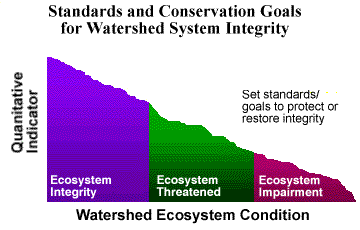
In trying to solve environmental problems or prevent them from happening, we have set water quality standards, local water supply antidegradation goals, natural heritage conservation goals, etc. These goals and standards—usually set by programs within government agencies or different policy making boards—have been important in developing regulations and in serving as indicators.
Unfortunately, we don't have a natural system barometer to hang outside our window that gives us a direct measure of existing conditions. Instead, we must choose multiple indicators (chemical, biological, and physical) that can help us indirectly gauge overall system integrity.
Many agencies have found the need for a more integrated approach to assessing conditions and developing management strategies. Although they have made progress through existing regulations and programs, they're now faced with solving more thorny environmental problems that cut across programs and jurisdictions. Particularly vexing are nonpoint source pollution and habitat degradation.
Indeed, many management agencies and organizations are realizing that effective resource management is
- never ending
- involves those affected by decisions
- reflects the integrated nature of nature itself
Watersheds are practical for integrating these efforts. The emerging watershed framework builds on existing management programs and resources but has as its goal watershed system integrity. When focusing on the watershed's integrated system, people start thinking out of the programmatic or organizational boxes and start asking themselves, "What are our common goals?"