U.S. flag

An official website of the United States government

Here’s how you know

Dot gov

Official websites use .gov
A .gov website belongs to an official government organization in the United States.

HTTPS

Secure .gov websites use HTTPS
A lock (LockA locked padlock) or https:// means you have safely connected to the .gov website. Share sensitive information only on official, secure websites.

  • Environmental Topics
  • Laws & Regulations
  • Report a Violation
  • About EPA
Contact Us

Grantee Research Project Results

Final Report: The Learning Barge: Environmental + Cultural Ecologies on the Elizabeth River

EPA Grant Number: SU833802
Title: The Learning Barge: Environmental + Cultural Ecologies on the Elizabeth River
Investigators: Crisman, Phoebe
Institution: University of Virginia
EPA Project Officer: Page, Angela
Phase: II
Project Period: August 31, 2007 through August 31, 2008
Project Amount: $75,000
RFA: P3 Awards: A National Student Design Competition for Sustainability Focusing on People, Prosperity and the Planet - Phase 2 (2007) Recipients Lists
Research Category: Pollution Prevention/Sustainable Development , P3 Awards , P3 Challenge Area - Sustainable and Healthy Communities , Sustainable and Healthy Communities

Objective:

The Phase II objective was to create an innovative and exemplary energy self-sustaining educational environment whose physical design is an integral part of the Elizabeth River Project’s educational outreach programs (figs.6&7). The Barge would traverse the Elizabeth River—a culturally complex, economically challenged, pollution ridden tidal estuary with river health indicators that show a high level of PAHs, instances of cancer, reduced biomass, and degenerating biodiversity. The Barge would tell and embody the story of the inextricable link between water and land, as well as the crucial balance between industrialized human activity and natural environment on the River. This agenda led to numerous design investigations all structured by the context of sustainability. The 32’x120’ Learning Barge is independent of the power, water and waste grid by generating power from the sun and wind, optimizing efficiency and reducing consumption. Daylight and natural ventilation are maximized to reduce electricity demand and negate the need for air conditioning. All rainwater is collected and filtered for non-potable use. The wetland basins filter graywater and two composting toilets are used. The design uses cost effective building techniques to reduce material waste and recycled low maintenance, and durable green materials are utilized. The team discovered there is not a LEED certification for marine vessels and proposed a pilot program to the USGBC, but the project timeline did not allow such a program to be developed. Unlike conventional projects, environmental, technical, aesthetic, social and economic concerns have been balanced throughout the process.

Figure 1

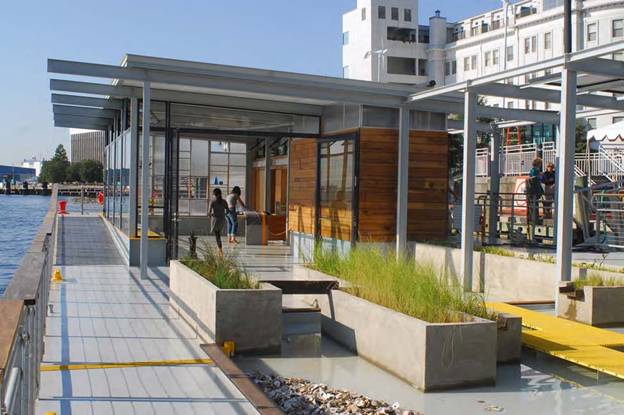
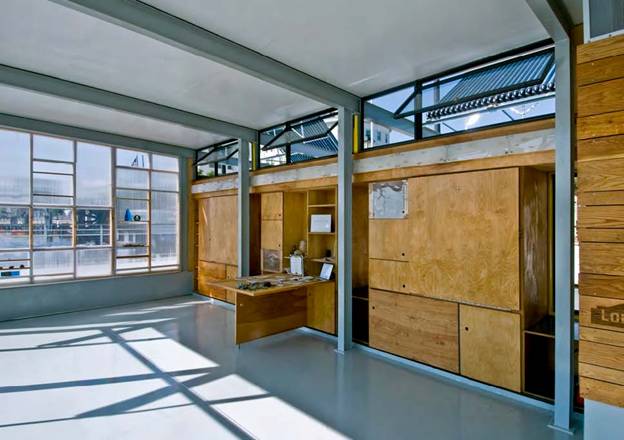
View from onboard wetland filtration basins to classroom “River Lab” beyond. 11 The RiverLab classroom is passively cool by operable windows and high ceilings in summer and heated by a solar thermal system in winter.

Figure 2

Figure 3

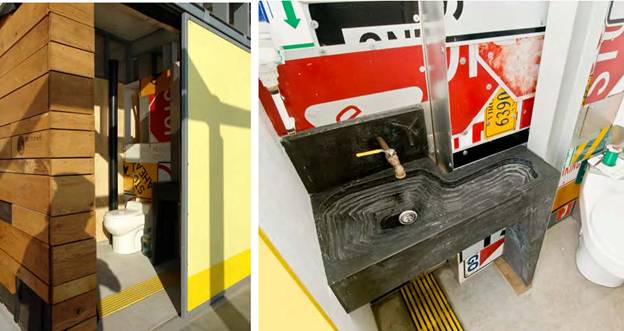
Composting toilet and recycled sign wall. 13 Cast concrete ‘topography’ sink models water flow over terrain.

Summary/Accomplishments (Outputs/Outcomes):

Key Phase II benchmarks were the submission of drawings and specifications for US Coast Guard approval, refinement of final design and calculations, transportation of prefabricated components and final construction on site in Norfolk, physical launch of the Learning Barge and start of educational operations by ERP. Each benchmark was met and the actual accomplishments exceeded the anticipated outcomes specified in the assistance agreement work plan. The greatest challenge was to secure funds to build the entire project and support three years of operations. If the project were to be repeated, the only thing that might be done differently would be to find a partner with a greater ability to raise funds. Nearly all funds were raised by the Faculty Advisor/PI through grant applications, and with her students through prize money. Ultimately we effectively leveraged the EPA P3 funds and reached our goal. We planned to begin final assembly at the Norfolk shipyard in summer 2008, but the start date was delayed until the following summer and the EPA P3 grant was extended by one year.

Photovoltaic & Wind Electrical System: Because the Learning Barge is a vessel (not a building), the entire electrical system is 24V DC power. During the design process ERP decided to use more electrical devices onboard than first calculated, so daily power draw increased and more electric generation capacity was needed. Through comprehensive energy modeling, we determined that an additional 24V, marine grade wind turbine and two 200 watt photovoltaic panels (GEPVp-200w-DC) should be added. Now eight, 200 watt photovoltaic panels and two AirX, 24V, marine grade wind turbine generate approx. 3,600 Watt-hr of electricity per day, which is 20% more than the daily projected load of 2,876 Watt-hr. This provides flexibility to store excess energy in the batteries and avoid over discharge. Six, 12V, 250 Am-hr, deep cycle batteries provide over 3 days of storage capacity for both the solar and wind generators, while allowing for wind faster than 7.5 miles/hour in 24 hours. The system was sized to provide required power, while encouraging Barge visitors to monitor and reduce their energy consumption—thereby developing an awareness of how and where electricity is generated and then consumed.

Solar Hot Water Heating System: The evacuated tube solar hot water heating system warms the classroom in cool months of operation. The system uses fifty evacuated tubes on the roof of the Barge to gather energy from the sun and transfer that energy directly to water contained in insulated water storage tanks below deck. The single 150-gallon water storage tank specified in the schematic phase shifted to two, 400-gallon steel tanks. In order to increase vessel stability, the tanks were designed as an integral part of the hull structure, which produced an interesting hybrid of barge structure and solar heating system.

Water Filtration Systems: Based on usage calculations, we projected gray water quantities would be small enough to be managed through transpiration and evaporation. That has proved to be true and the gray water wetland basins are thriving even during the winter months. The river water filtration basins have become a popular and effective demonstration device, as students measure and record water quality improvements in the river water as it moves through the basins in order to understand the function and effectiveness of native wetland plants that they observe along the river.

Monitoring System: The monitoring system wirelessly collects data from sensor boards such as humidity levels, temperatures, power generated through PV cells and wind turbines, and power consumed per specific time interval. This data is collected and stored on the base station on the flash memory chips built on the boards itself. The base station then connects to a local laptop computer, which acts as a server to extract all the data from the base station and provide it to the Learning Barge interface. This interface displays various data in interactive graphical form to make the system comprehensible to younger students. Several design refinements were developed from the original schematic. For instance, the humidity and temperature board design was modified based on battery sensor boards faults that the engineering team encountered in another research project (ecoMOD3). The new humidity and sensor boards have the same humidity sensor, but integrate an analog temperature sensor LM19 in place of the digital sensor used in eM3 board. This makes reading temperature values into the MSP430 much easier. This temperature sensor is more reliable and accurate than the internal MSP430 temperature sensor that we used for eM3 humidity boards. Another change is the addition of two new voltage regulators. These voltage regulators convert the available 24 V on the barge to 12 V first, and then convert this 12V to 5V for the humidity sensor to use, and 3.3V for the MSP430 to use.

The base station sends all the data to the laptop through its serial port or stores all the collected data and sends in real-time data when connected to a laptop later. The team wrote a Java server code that connects the base station through the serial port and extracts the information. The server can be easily programmed to output this data in any format needed for the Labview interface that displays various visual graphs and charts. See the appendices for board and sensor schematics.

Post-Occupancy Evaluation: The goal of creating a completely energy self-sustaining educational environment was achieved. Now we will analyze impacts of the barge over its life cycle compared to the impacts of a similar classroom. The Barge design adapted readily available sustainable technology so that visitors might easily imagine transferring these small-scale sustainable systems to their own homes or places of work. Barge visitors have expressed great interest in applying these sustainable technologies and we hope to have evidence of home installations soon. While the photovoltaic and wind power generation systems are quantitatively performing as planned, building performance is also determined by user thermal, lighting, spatial and other preferences. Crisman is performing a qualitative post-occupancy evaluation to supplement the numerical data. If necessary, we will make recommendations for ongoing improvements to the systems.

Figure 4

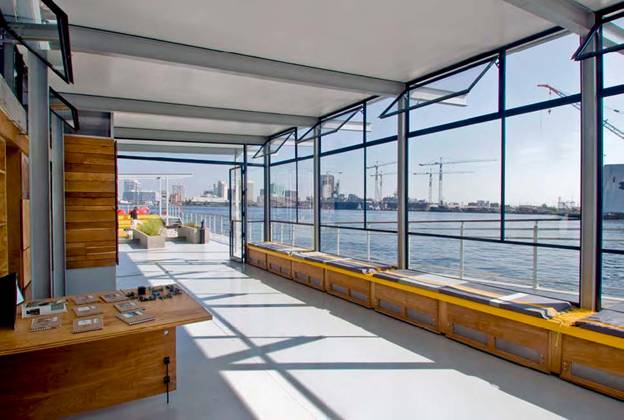
The solar thermal array is highlighted through clerestory ventilating windows in the RiverLab classroom.

Conclusions:

Quantifiable benefits to people, prosperity, and the planet (estimated or actual)

Reduced environmental impact: Two distinct water systems onboard collect and filter water: one freshwater and one brackish. It was estimated that 40 gallons/day of filtered rainwater will be used for hand washing and other non-potable uses. Based on the 276 day operating season, the Barge will cleanse and release 11,040 gallons of freshwater water that has been filtered by native freshwater plants. As part of the educational curriculum, up to 11 gallons/minute of river water can be manually pumped onboard to flow through a series of filtration basins using native saltwater plants. Students test the water at several points along its journey. 325 gallons of river water filter through the basins each week of the 40-week operational period, resulting up to 13,000 gallons of cleansed water returned to the River. Photovoltaic panels and two wind generators supply the 19,350 watt-hours of electricity/year. This power would be acquired from the grid otherwise, which is supplied by a coal burning power plant located nearby. Though the number is small, the conceptual power of this renewable energy demonstration—in sight of the power plant itself, is immense.

Qualitative benefits to people, prosperity, and the planet

Improved quality of life: The Learning Barge directly contributes to improved quality of life through pollution prevention resulting from the renewable energy and water filtration systems onboard, along with the long-term impact of educational programs as they foster environmental stewardship. Pollution prevention is a major public issue in the Norfolk area: the Elizabeth River is at the geographic and political heart of the region. Home to the US Navy’s Atlantic fleet, the world’s largest Naval station and one of the largest commercial harbors in the US, the area is nationally important economically, yet environmentally degraded.7 The toxic benthic levels of the Elizabeth River have had a drastic affect on the food chain and the oyster population that once supplemented the region’s economy has been reduced by 99%.9 In 2005, the River had lower species diversity and biomass, and higher pollution indicative species than the Chesapeake Bay Benthic Restoration Goals.10 As the Barge filters water and provides working space for increased oyster regeneration, researchers on the Barge will constantly monitor the Benthic Index of Biotic Integrity, abundance, and community composition. Researchers analyze how the Barge’s presence improved the B-IBI levels particular branch of the River over several months and compare results with overall Chesapeake Bay Benthic benchmarks. With improved biodiversity pollution-phobic species will begin to repopulate the river; regenerating regional seafood commerce.

Education: The primary educational benefit is increased K-12 student, teacher and public understanding of Elizabeth River ecology and impact of local watershed cities on this ecosystem. The Barge’s programs will reach over 19,000 people per year, thereby improving their quality of life through knowledge acquisition and connectivity with their home river. Indicators of success will be the number and percent of students attending educational workshops on the Barge, and exhibiting an increased understanding of Elizabeth River ecology. The Virginia Institute of Marine Science will instruct 100 teachers per year, 25 per city each summer, using a popular VIMS curriculum designed for ERP. These teachers will reach approx. 10,000 students. An online data collection system will survey what day to day conservation methods and which sustainable components participants consequently implemented in their own homes due to their experience on the Barge. The impact on science education in the area will be measured by evaluating the science SOL scores of students who participated in the Barge’s program. Science SOL testing occurs in grades 3, 5, and 8 and in high school for Earth Science and Biology, allowing the science progression of Barge students to be tracked for up to nine years after their initial interaction with the Barge.

Transferable impacts: The idea of replicability is appropriate to the Learning Barge as a viable model of integrated sustainable technologies and environmental education. The project adapts existing knowledge and readily available technology to produce in an innovative approach to environmental education so that visitors can easily imagine transferring these small-scale sustainable systems to their own homes or places of work.

Balancing people, prosperity & the planet: The 3 P’s are intertwined in the project. Human health and comfort, and environmental, technical and economic concerns were carefully balanced at each decision point. Design decisions for conventional projects are often made in isolation and environmental impact is not sufficiently considered.

References:
 
 The Learning Barge: Self-Sufficient Field Station
NCER Final Report: 8/18/2010, EPA Agreement #: SU83380201-0, Project Period: 1/1/2008 – 1/1/2010
 
 
Faculty Advisor, Departments, and Institutions:
Phoebe Crisman, Associate Professor/Associate Dean for Research, School of Architecture, University of Virginia School of Engineering & Applied Science, Dept of Electrical & Computer Engineering (Prof. Paxton Marshall) College of Arts & Sciences, McIntire Department of Art (Prof. Sanda Iliescu), Curry School of Education
Student Team Members and Departments at the University of Virginia: School of Architecture: Dept of Architecture: Danielle Willkens (Project Manager 07-09), Adam Donovan (Project Manager 06-07), Andrew Daley (Construction Manager), Christian Rush Bailey, Kim Barnett, Erin Binney, Katherine Claeys, Ama Cobbina, Sarah Collins, Eliza Davis, Kevin Day, Lauren DiBianca, Erin Dorr, Zoe Edgecomb, Ben Fey, Dhara Goradia, Nima Govind, Ginny Harr, Liz Hoogheem, Matt Hural, Elana Koplik, Kate Lafsky, Daphne Lasky, Shanti Levy, Matt McClelland, Kelly McConnaha, Emily Miyares, Molly O’Donnell, Katherine Pabody, Graham Peterson, Kurt Petschke, James Pint, Shirin Reklaoui, Phoebe Richbourg, Sarah Rosenthal, Ravi Sarpatwari, Tommy Schaperkotter, Robin Mae Schick, Jen Siomacco, Kate Spengel, Clark Tate, Nora White, Clarice Zusky Public Art: Erin Hannegan, Whitney Odell, Emily Williamson, Cameron Ringness, Mary Butcher, Maressa Perreault, Sarah Kunkel, Erin Root, Dan Kim, Marilyn Moedinger, Katie Clinton, Clare Van Montfrans, Sarah Kott, Cara Warren Dept of Landscape Architecture: Laura Bandara, Neil Budzinski, Allegra Churchill, Jayme Schwartzberg Depts of Architectural History /Planning: Taylor Cooper, April Johnson, Laura Purvis, Rachel Robinson, Edwin Wright School of Engineering & Applied Science: Kacy Burnsed, Adam Burton, Selim El-Barasi, Ezekiel Fugate, Hamid Hashime, Ayman Ibrahim, Suchit Ligade, Alexander Martin, Whitney Newton, Jeremy Rominger, Farhad Omar Curry School of Education: Ian Binns, Christine Schnittka, Lara Smetana College of Arts & Sciences: Dept of Art: Matthew Bower, Kristen Henderson, Mary Herbert, Hadley Perona, Anjushree Rathi, Rachel Singel, Alessandra Calaguire, Supriya Sudan, Kristin Simpson, Lauren Catlett
1. BACKGROUND + PROBLEM DEFINITION
If we human beings learn to see the intricacies that bind one part of a natural system to another and then to us, we will no longer argue about the importance of wilderness protection, or over the question of saving endangered species, or how human communities must base their economic futures–not on short-term exploitation–but on long-term, sustainable development. Gaylord Nelson, Founder of Earth Day 1
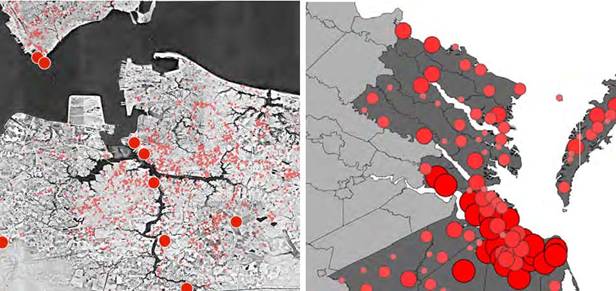
People, prosperity and the planet are completely intertwined in the conception and realization of the Learning Barge project that emerged from a collaborative planning process for 330 acres of contaminated industrial land along the Elizabeth River in Chesapeake, Virginia. In 1967 a catastrophic wood treatment plant fire and spill released large quantities of creosote into the River, resulting in current high levels of toxins in river sediment, onshore soil and groundwater (fig. 1). The indicator species for the River’s heath, the mummichog fish, shows elevated cancer rates due to the water’s toxicity.2 Air and water pollution have affected human health as well. With higher concentrations there are elevated incidences of cancer in the region and thus elevated health costs (fig. 2). Federal, state and local regulatory agencies (EPA region 3, VA DEQ, NOAA), private industries, NPO’s and the local community engaged in a process of conceptualizing an environmentally sustaining future for Money Point, thereby changing one of the most contaminated sites on the Eastern Seaboard into a model of co-existence for ecology and industry.
The University of Virginia (UVA) Institute for Environmental Negotiation facilitated the process and Professor Phoebe Crisman designed a Sustainable Revitalization Plan funded by Virginia Environmental Endowment. The Taskforce wanted to teach people about the remediation and restoration process and to demonstrate sustainable practices that could be translatable to their own homes. When searching for a building site, however, the extensive private industrial land ownership along the shore prevented waterfront access. With the river as the only available site, the traveling barge concept emerged and soon the advantages of movement became apparent. Now the Learning Barge could be a highly visible platform that travels on the River between 4 major cities while monitoring and teaching about ongoing EPA and VA DEQ sediment remediation, pollution prevention and restoration projects. During the US EPA P3 Phase I grant it was determined that the project was feasible as a completely off-the-grid vessel. Phase II continued design develop and culminated in the construction of an energy self-sustaining educational environment that will have a positive impact on the students, the community, and in the broadest sense, the planet.


Figure  5
 
1. Pollution of Elizabeth River. EPA: Window to My Environment. 2. Cancer Concentrations. GIS: Virginia Atlas of Community Health


Figure  6
 
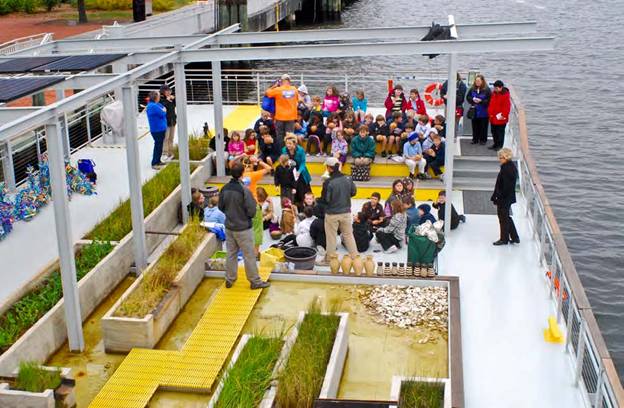
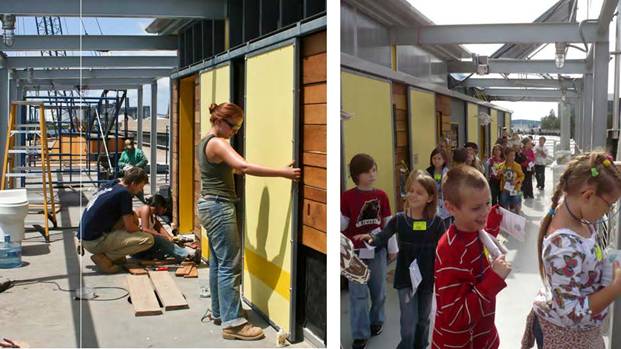
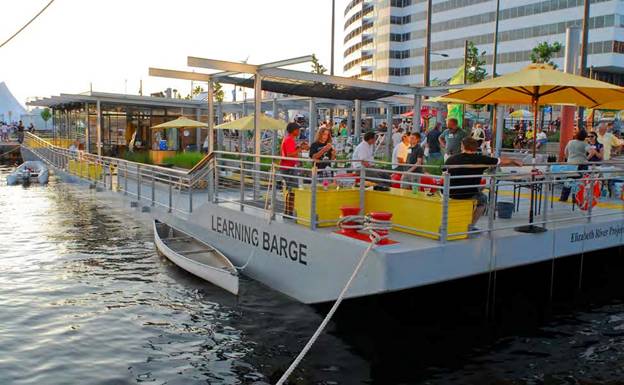
3. Third grade students during a field trip on the Learning Barge 11/2009
Relationship to people, prosperity and the planet
Phase II focused on integrating and sustaining environmental protection, economic prosperity, and social benefit across several scales—from the classroom, to watershed to ocean to world. Future generations will be affected by the Learning Barge, as it fosters environmental stewardship and positive behavior change among the residents of the region and beyond through publications, pollution prevention and reduced resource consumption. As noted by Marjorie Mayfield Jackson, the Elizabeth River Project’s Executive Director, “It seems to me that research applied to real-world needs, with the immediate, reality-based feedback it engenders from implementers eager to move forward, must provide the best classroom of all, and the best test of the value of the research.” UVA was actively involved in raising funds to economically sustain the Barge’s educational programs and faculty continue to perform post-occupancy evaluation and make needed changes to both vessel and programs. This interdisciplinary community collaboration makes a technically and environmentally exemplary learning environment available to underserved population, schools and non-profit groups, while positively impacting air, land, and water as well as ecosystem and human health.
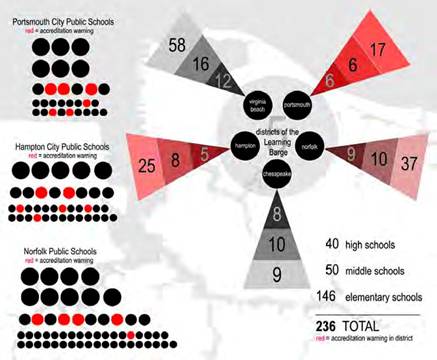
The Learning Barge is owned and operated by the Elizabeth River Project in collaboration with several educational partners. 6,000 students and adults visited the Barge in the first six months and over 19,000 visitors are projected during the first year of educational operations (fig. 3). Because of its high visibility on the River between the dense urban areas of Norfolk, Portsmouth and Chesapeake, Virginia, it is seen by thousands of passersby each day. The Barge uses a multi-modal educational approach: auditory, visual, and kinesthetic. The acquisition and retention of knowledge is be facilitated through the first-hand program unlike the vicarious learning methods of a conventional classroom. Most area school children and adults have little opportunity to experience the River firsthand, especially to go out on the water, conduct field experiments like water monitoring, and to directly interact with the tidal estuary environment. The Barge supports the Governor’s goal to provide a meaningful watershed experience to every Virginia student before graduation from high school. Science education is particularly important for the region: three out of the five public school districts surrounding the Elizabeth River have underperformed the state average for the Standards of Learning (SOL) science test (fig.4). The core curriculum of the Barge is aimed at grades 6-8, crucial years in science education between the mandatory grade 5 and 8 Science SOL tests. Unlike nature centers located in pristine “nature,” the Learning Barge traverses an important urban river where the often problematic and complex relationship between human settlement and the natural world is jarringly visible. The moveable Learning Barge stops at ongoing restoration sites on the Elizabeth River for a few months at a time, with each site demonstrating particular conditions and lessons about the River. For example, the Barge will be moored offshore at Money Point during the sediment remediation and wetland restoration project, dock at Paradise Creek to study the creek restoration and utilize the Eco Park, and visit several public schools on the river. Participants see firsthand the ongoing remediation and restoration processes.


Figure 7
 
1.    Composition of five district clusters around Elizabeth River with accreditation warnings. VA DOE
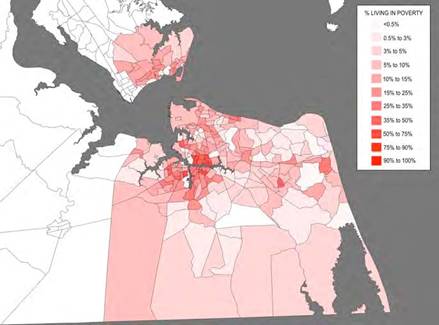
2.    Percentage living in poverty around the Elizabeth River. GIS Social Explorer Interactive Data Maps.


Figure 8
 
The site-based solar and wind energy technologies are innovatively integrated into the Barge’s design, building systems and the construction process. The objective of these systems is to publicly exhibit a high quality of life while demonstrating a model of energy independence that, if widely adopted, could substantially reduce global pollution. Sustainable building concepts are used, including rain and greywater reuse and native plant filtration systems, composting waste disposal, passive solar concepts and day lighting, recycled and green material choices. While serving as an interactive classroom, the 32’x120’ Barge was designed as a working exhibit that demonstrates “green practices” as an integral part of the curriculum. The 1/10-acre barge, the size of many urban single-family lots, makes this self-sufficient energy demonstration very real and applicable to every visitor. The Learning Barge is a powerful demonstration of sustainable practices for locations beyond Virginia as well.
The Learning Barge also creates habitat and treats river water onboard—leaving the river cleaner than when it arrived. The Elizabeth, one of the most polluted rivers in the Chesapeake Bay, is part of the EPA’s Urban Rivers Restoration Initiative that “concentrates on reduction of toxics and nutrients from storm water runoff, pollution prevention, and restoration of wildlife habitat”.3 The River is contaminated by heavy metals from military and industrial sources that pose threats to human health and wildlife. This toxic condition contrasts with the rich history of the River, native home of the Chesepians and explored by Captain John Smith in 1608.4 This history is especially significant as the US has just celebrated the 400th anniversary of the first permanent European settlement nearby at Jamestown. The combination of cultural history, ongoing remediation and habitat restoration, and a thriving urban population of 1.6 million create an ideal place to learn and foster environmental stewardship across a a broad constituency.


Figure 9
 
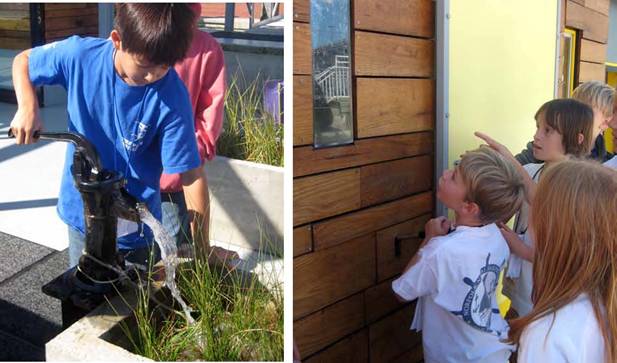
6. Pumping filtered rainwater water into sink cistern 7. Pumping filtered rainwater water into sink cistern
Relevance and significance to developing or developed world
The Learning Barge serves several districts with high poverty levels that wouldn’t have otherwise been exposed to the river and the science education that it offers (fig.5). The rainwater collection and renewable energy systems use inexpensive and readily available technology that demonstrates how visitors can replicate these cost saving alternatives and reduce utility expenditure by installing rain barrels, constructing rain gardens, or utilizing photovoltaic or solar hot water systems in their own homes. This is crucial in this high poverty region considering, on average, low-income households spend 14% of their annual income on energy, in contrast with the average 3.5 % spent on energy by those of higher economic tiers.6
Implementation of the P3 Award project as an educational tool
Education at UVA: The research/design/build process was an important learning experience for students at UVA. The project was fully integrated with School of Architecture curriculum through several interdisciplinary seminars and design studios taught by Professor Crisman along with students from the Schools of Engineering, Education, and Arts & Sciences. This collaboration comes from a shared interest in interdisciplinary work at UVA and a deep commitment to values associated with sustainable design. Students participated in Phase I during elective courses that fulfill specific technical degree requirements. Research, development, and strategic planning for the Phase I competition was fully integrated into a 6 credit design studio (spring 06 & spring 07), which met three days/week from 2:00-6:00 pm. Twelve intense contact hours between faculty and students produced an excellent collaborative process, and this format continued in Phase II (spring 08-fall 09). Course evaluations clearly indicate that the format and content was an intense, challenging and successful educational tool for UVA students: “This is the best studio I have had at UVA. It is exciting and sometimes frustrating to work on a “real life” project, but always rewarding. Phoebe’s dedication to the project and the studio is unwavering and energizing. She has designed a studio that works at all scales, focusing at times on careful construction details and others at the scale of an industrial landscape; it is a studio that exemplifies my understanding of UVA’s goals as a school.” (spring 06) Student awareness of sustainability and its connection to people, prosperity, and the planet has certainly been increased and integrated into the subsequent studies. The timeline (appendix 1) depicts significant project milestones linked to academic semesters. Phase I included project research, design, development and full scale mock-ups. Phase II continued with final design and fabrication of renewable energy and water filtration systems as part of the classroom construction process. The Learning Barge was publically launched in September 2009 in time for the first school children to arrive that fall.
Educational impact beyond: The project is disseminated as a model sustainable learning environment through the Learning Barge website and a forthcoming book by Prof. Crisman that documents research, design, construction process and educational curriculum.5 Both website and book include complete design drawings, material selections and equipment specifications. The project has received significant coverage in both the popular and discipline specific print media (see complete list of publications). Popular media has allowed us to reach a broad audience, while architecture and engineering journals share design details and technical data. In this way, the project has become a national, even international, model for the design of a sustainable environmental learning station with integrated educational curriculum.


Figure 10
 
8. UVA architecture students building the armature wall (7/2009) 9. Third grade students on a field trip (11/2009)
2. PURPOSE, OBJECTIVES, SCOPE
The Phase II objective was to create an innovative and exemplary energy self-sustaining educational environment whose physical design is an integral part of the Elizabeth River Project’s educational outreach programs (figs.6&7). The Barge would traverse the Elizabeth River—a culturally complex, economically challenged, pollution ridden tidal estuary with river health indicators that show a high level of PAHs, instances of cancer, reduced biomass, and degenerating biodiversity. The Barge would tell and embody the story of the inextricable link between water and land, as well as the crucial balance between industrialized human activity and natural environment on the River. This agenda led to numerous design investigations all structured by the context of sustainability. The 32’x120’ Learning Barge is independent of the power, water and waste grid by generating power from the sun and wind, optimizing efficiency and reducing consumption. Daylight and natural ventilation are maximized to reduce electricity demand and negate the need for air conditioning. All rainwater is collected and filtered for non-potable use. The wetland basins filter graywater and two composting toilets are used. The design uses cost effective building techniques to reduce material waste and recycled low maintenance, and durable green materials are utilized. The team discovered there is not a LEED certification for marine vessels and proposed a pilot program to the USGBC, but the project timeline did not allow such a program to be developed. Unlike conventional projects, environmental, technical, aesthetic, social and economic concerns have been balanced throughout the process.


Figure 11
 
10. View from onboard wetland filtration basins to classroom “River Lab” beyond. 11 The RiverLab classroom is passively cool by operable windows and high ceilings in summer and heated by a solar thermal system in winter.


Figure 12


Figure 13
 
12 Composting toilet and recycled sign wall. 13 Cast concrete ‘topography’ sink models water flow over terrain.
3. DATA, OUTPUTS, OUTCOMES, FINDINGS
Key Phase II benchmarks were the submission of drawings and specifications for US Coast Guard approval, refinement of final design and calculations, transportation of prefabricated components and final construction on site in Norfolk, physical launch of the Learning Barge and start of educational operations by ERP. Each benchmark was met and the actual accomplishments exceeded the anticipated outcomes specified in the assistance agreement work plan. The greatest challenge was to secure funds to build the entire project and support three years of operations. If the project were to be repeated, the only thing that might be done differently would be to find a partner with a greater ability to raise funds. Nearly all funds were raised by the Faculty Advisor/PI through grant applications, and with her students through prize money. Ultimately we effectively leveraged the EPA P3 funds and reached our goal. We planned to begin final assembly at the Norfolk shipyard in summer 2008, but the start date was delayed until the following summer and the EPA P3 grant was extended by one year.
Photovoltaic & Wind Electrical System: Because the Learning Barge is a vessel (not a building), the entire electrical system is 24V DC power. During the design process ERP decided to use more electrical devices onboard than first calculated, so daily power draw increased and more electric generation capacity was needed. Through comprehensive energy modeling, we determined that an additional 24V, marine grade wind turbine and two 200 watt photovoltaic panels (GEPVp-200w-DC) should be added. Now eight, 200 watt photovoltaic panels and two AirX, 24V, marine grade wind turbine generate approx. 3,600 Watt-hr of electricity per day, which is 20% more than the daily projected load of 2,876 Watt-hr. This provides flexibility to store excess energy in the batteries and avoid over discharge. Six, 12V, 250 Am-hr, deep cycle batteries provide over 3 days of storage capacity for both the solar and wind generators, while allowing for wind faster than 7.5 miles/hour in 24 hours. The system was sized to provide required power, while encouraging Barge visitors to monitor and reduce their energy consumption—thereby developing an awareness of how and where electricity is generated and then consumed.
Solar Hot Water Heating System: The evacuated tube solar hot water heating system warms the classroom in cool months of operation. The system uses fifty evacuated tubes on the roof of the Barge to gather energy from the sun and transfer that energy directly to water contained in insulated water storage tanks below deck. The single 150-gallon water storage tank specified in the schematic phase shifted to two, 400-gallon steel tanks. In order to increase vessel stability, the tanks were designed as an integral part of the hull structure, which produced an interesting hybrid of barge structure and solar heating system.
Water Filtration Systems: Based on usage calculations, we projected gray water quantities would be small enough to be managed through transpiration and evaporation. That has proved to be true and the gray water wetland basins are thriving even during the winter months. The river water filtration basins have become a popular and effective demonstration device, as students measure and record water quality improvements in the river water as it moves through the basins in order to understand the function and effectiveness of native wetland plants that they observe along the river.
Monitoring System: The monitoring system wirelessly collects data from sensor boards such as humidity levels, temperatures, power generated through PV cells and wind turbines, and power consumed per specific time interval. This data is collected and stored on the base station on the flash memory chips built on the boards itself. The base station then connects to a local laptop computer, which acts as a server to extract all the data from the base station and provide it to the Learning Barge interface. This interface displays various data in interactive graphical form to make the system comprehensible to younger students. Several design refinements were developed from the original schematic. For instance, the humidity and temperature board design was modified based on battery sensor boards faults that the engineering team encountered in another research project (ecoMOD3). The new humidity and sensor boards have the same humidity sensor, but integrate an analog temperature sensor LM19 in place of the digital sensor used in eM3 board. This makes reading temperature values into the MSP430 much easier. This temperature sensor is more reliable and accurate than the internal MSP430 temperature sensor that we used for eM3 humidity boards. Another change is the addition of two new voltage regulators. These voltage regulators convert the available 24 V on the barge to 12 V first, and then convert this 12V to 5V for the humidity sensor to use, and 3.3V for the MSP430 to use.
The base station sends all the data to the laptop through its serial port or stores all the collected data and sends in real-time data when connected to a laptop later. The team wrote a Java server code that connects the base station through the serial port and extracts the information. The server can be easily programmed to output this data in any format needed for the Labview interface that displays various visual graphs and charts. See the appendices for board and sensor schematics.
Post-Occupancy Evaluation: The goal of creating a completely energy self-sustaining educational environment was achieved. Now we will analyze impacts of the barge over its life cycle compared to the impacts of a similar classroom. The Barge design adapted readily available sustainable technology so that visitors might easily imagine transferring these small-scale sustainable systems to their own homes or places of work. Barge visitors have expressed great interest in applying these sustainable technologies and we hope to have evidence of home installations soon. While the photovoltaic and wind power generation systems are quantitatively performing as planned, building performance is also determined by user thermal, lighting, spatial and other preferences. Crisman is performing a qualitative post-occupancy evaluation to supplement the numerical data. If necessary, we will make recommendations for ongoing improvements to the systems.


Figure 14
 
The solar thermal array is highlighted through clerestory ventilating windows in the RiverLab classroom.
4. DISCUSSIONS, CONCLUSIONS, RECOMMENDATIONS
Quantifiable benefits to people, prosperity, and the planet (estimated or actual)
Reduced environmental impact: Two distinct water systems onboard collect and filter water: one freshwater and one brackish. It was estimated that 40 gallons/day of filtered rainwater will be used for hand washing and other non-potable uses. Based on the 276 day operating season, the Barge will cleanse and release 11,040 gallons of freshwater water that has been filtered by native freshwater plants. As part of the educational curriculum, up to 11 gallons/minute of river water can be manually pumped onboard to flow through a series of filtration basins using native saltwater plants. Students test the water at several points along its journey. 325 gallons of river water filter through the basins each week of the 40-week operational period, resulting up to 13,000 gallons of cleansed water returned to the River. Photovoltaic panels and two wind generators supply the 19,350 watt-hours of electricity/year. This power would be acquired from the grid otherwise, which is supplied by a coal burning power plant located nearby. Though the number is small, the conceptual power of this renewable energy demonstration—in sight of the power plant itself, is immense.
Qualitative benefits to people, prosperity, and the planet
Improved quality of life: The Learning Barge directly contributes to improved quality of life through pollution prevention resulting from the renewable energy and water filtration systems onboard, along with the long-term impact of educational programs as they foster environmental stewardship. Pollution prevention is a major public issue in the Norfolk area: the Elizabeth River is at the geographic and political heart of the region. Home to the US Navy’s Atlantic fleet, the world’s largest Naval station and one of the largest commercial harbors in the US, the area is nationally important economically, yet environmentally degraded.7 The toxic benthic levels of the Elizabeth River have had a drastic affect on the food chain and the oyster population that once supplemented the region’s economy has been reduced by 99%.9 In 2005, the River had lower species diversity and biomass, and higher pollution indicative species than the Chesapeake Bay Benthic Restoration Goals.10 As the Barge filters water and provides working space for increased oyster regeneration, researchers on the Barge will constantly monitor the Benthic Index of Biotic Integrity, abundance, and community composition. Researchers analyze how the Barge’s presence improved the B-IBI levels particular branch of the River over several months and compare results with overall Chesapeake Bay Benthic benchmarks. With improved biodiversity pollution-phobic species will begin to repopulate the river; regenerating regional seafood commerce.
Education: The primary educational benefit is increased K-12 student, teacher and public understanding of Elizabeth River ecology and impact of local watershed cities on this ecosystem. The Barge’s programs will reach over 19,000 people per year, thereby improving their quality of life through knowledge acquisition and connectivity with their home river. Indicators of success will be the number and percent of students attending educational workshops on the Barge, and exhibiting an increased understanding of Elizabeth River ecology. The Virginia Institute of Marine Science will instruct 100 teachers per year, 25 per city each summer, using a popular VIMS curriculum designed for ERP. These teachers will reach approx. 10,000 students. An online data collection system will survey what day to day conservation methods and which sustainable components participants consequently implemented in their own homes due to their experience on the Barge. The impact on science education in the area will be measured by evaluating the science SOL scores of students who participated in the Barge’s program. Science SOL testing occurs in grades 3, 5, and 8 and in high school for Earth Science and Biology, allowing the science progression of Barge students to be tracked for up to nine years after their initial interaction with the Barge.
Transferable impacts: The idea of replicability is appropriate to the Learning Barge as a viable model of integrated sustainable technologies and environmental education. The project adapts existing knowledge and readily available technology to produce in an innovative approach to environmental education so that visitors can easily imagine transferring these small-scale sustainable systems to their own homes or places of work.
Balancing people, prosperity & the planet: The 3 P’s are intertwined in the project. Human health and comfort, and environmental, technical and economic concerns were carefully balanced at each decision point. Design decisions for conventional projects are often made in isolation and environmental impact is not sufficiently considered.
Other pertinent information
Diverse disciplines + partners: The Learning Barge project proved that the diverse disciplines, represented by students and faculty from the UVA’s Schools of Architecture, Engineering and Applied Science, and Education, could all contribute in a substantive and constructive manner. The broad scope of the project indeed required a diverse team. Though engineers, architects and landscape architects often work together in professional practice, few students of these disciplines have the opportunity to learn from one another while in the academy. Collaborating with education students was even more unusual, and in all cases was useful and inspiring. In addition to disciplines internal to UVA, several external partners and disciplines were involved including non-profit organizations, governmental agencies and public school districts. The Learning Barge supports the mission of UVA’s primary partner, the ERP, to restore the River to the highest practical level of environmental quality through government, business and community partnerships. The ERP works with partners to voluntarily prevent future pollution, reduce existing pollution, create wildlife habitat and provide environmental education. For a complete description of ERP’s goals and priority actions underway, see Elizabeth River Restoration and Conservation, a Watershed Action Plan developed in partnership with the Virginia Department of Environmental Quality and diverse river interests. The ERP is an independent, 501-(c)(3) non-profit organization incorporated in 1993 and governed by a board of directors.
Project success: The Learning Barge project has been highly successful in terms of both process and product. Numerous peer reviewed awards and publications give credence to this claim. Multiple disciplines and diverse public, private and governmental institutions participated in the integrated design process and the built design is positively impacting the students, the community, and in the broadest sense, the planet. Daylight and natural ventilation was maximized to lower electricity demand and negate the need for air conditioning. The design optimized energy and water efficiency, while producing all electricity from renewable solar and wind sources. The Barge is also independent of the water and waste grid. Cost effective building techniques reduced material waste, while durable green or recycled materials reduce environmental impact. Utilizing LEED criteria, the project would achieve the top, Platinum rating. Today the Learning Barge is making a positive impact on sustainability efforts through implementation and outreach on the Elizabeth River and beyond.


Figure 15
 
Public Environmental Education outreach activities aboard the Learning Barge at RiverFest, Norfolk Harbor 6/2010
5. REFERENCES (selected)
Dauer. Daniel M. “Benthic Biological Monitoring Program of the Elizabeth River Watershed.” (presented to VA DEQ August 2006). Elizabeth River Project. Rediscover the Treasure: Money Point Revitalization. Portsmouth: ERP, 2006. Elizabeth River Project. Restoration and Conservation: A Watershed Action Plan. 2nd Edition, 2002. Elizabeth River Project. State of the River. Portsmouth: ERP, 2003. Elizabeth River Project. Wildlife Habitat Guide for Restoration and Landscaping in the Elizabeth River
Watershed. 2nd edition 2005. Global Security. “Naval Station Norfolk.” Military. http://www.globalsecurity.org/military/facility/norfolk.htm Jacobson, S., McDuff M. and Monroe, M. Conservation Education and Outreach Techniques. Oxford: Oxford
University Press, 2006.
Jamestown-Yorktown Foundation. “Significant Events in Jamestown’s History.” Jamestown Settlement and Yorktown Victory. (March 23, 2007) http://www.historyisfun.org/jamestown/jstimeline.cfm LEED for New Construction Version 2.2. Washington, DC: US Green Building Council, 2005. Mergenhagen, Paula. “What can minimum wage buy? – spending patterns of low-income households.”
American Demographics. Detroit: Ad Age Group. January 1996.
Morton, Robert A. An Overview of Coastal Land Loss: with Emphasis on the South Eastern United States. USGS Open File Report 03-337. NPS. “Drydock Number one, Norfolk Naval Shipyard.” National Historic Landmarks Program.
http://tps.cr.nps.gov/nhl/detail.cfm?ResourceId=1036&ResourceType=Structure. (March 23, 2007). Roberts, Morris H. and Lisle, Peter F. Ambient Toxicity of Water Samples from Four Locations in the Elizabeth River -A Comparision of Species Sensitivities (presented to VA DEQ August 15, 2000).


P3 Phase I:

The Learning Barge: Environmental + Cultural Ecologies on the Elizabeth River  | Final Report

Top of Page

The perspectives, information and conclusions conveyed in research project abstracts, progress reports, final reports, journal abstracts and journal publications convey the viewpoints of the principal investigator and may not represent the views and policies of ORD and EPA. Conclusions drawn by the principal investigators have not been reviewed by the Agency.

Project Research Results

  • P3 Phase I | Final Report

Site Navigation

  • Grantee Research Project Results Home
  • Grantee Research Project Results Basic Search
  • Grantee Research Project Results Advanced Search
  • Grantee Research Project Results Fielded Search
  • Publication search
  • EPA Regional Search

Related Information

  • Search Help
  • About our data collection
  • Research Grants
  • P3: Student Design Competition
  • Research Fellowships
  • Small Business Innovation Research (SBIR)
Contact Us to ask a question, provide feedback, or report a problem.
Last updated April 28, 2023
United States Environmental Protection Agency

Discover.

  • Accessibility
  • Budget & Performance
  • Contracting
  • EPA www Web Snapshot
  • Grants
  • No FEAR Act Data
  • Plain Writing
  • Privacy
  • Privacy and Security Notice

Connect.

  • Data.gov
  • Inspector General
  • Jobs
  • Newsroom
  • Open Government
  • Regulations.gov
  • Subscribe
  • USA.gov
  • White House

Ask.

  • Contact EPA
  • EPA Disclaimers
  • Hotlines
  • FOIA Requests
  • Frequent Questions

Follow.