


Grantee Research Project Results
Final Report: Advanced Electrochemical Inerting System For Food Preservation
EPA Contract Number: 68HERC20C0038Title: Advanced Electrochemical Inerting System For Food Preservation
Investigators: Zerby, Jacob
Small Business: Xergy Inc.
EPA Contact: Richards, April
Phase: I
Project Period: March 1, 2020 through August 31, 2020
Project Amount: $100,000
RFA: Small Business Innovation Research (SBIR) - Phase I (2020) RFA Text | Recipients Lists
Research Category: Small Business Innovation Research (SBIR) , SBIR – Sustainable Materials Management
Description:
Xergy has successfully developed the lowest maintenance, lowest cost, and lowest noise inerting system based on electrochemistry utilizing an anion exchange membrane (AEM) for low cost food preservation. The system reduces oxygen levels in an enclosure containing food to delay spoilage and reduce food waste. The work was built on previous inerting technology developed at Xergy utilizing proton exchange membranes (PEM) and expensive catalysts. Utilizing AEM technology will reduce the amount of precious metal catalysts and expensive metals, thus making electrochemical inerting economically viable for various inerting applications. The final system should be able to deplete 3% oxygen in a 30L container in 3 hours, with low noise, >20db, low cost (targeted to be <$15 for low volumes and <$5 at high volumes i.e. millions of units) and require little to no maintenance.
The system works based on a similar principal to AEM water electrolysis (AEMWE). In AEMWE, water is reacted at the cathode to form hydrogen and hydroxyl ions and the ions transport across the membrane to form water and oxygen at the anode. In AEM inerting, oxygen is present at the cathode side, so both water and oxygen are both reacted to form hydroxyl ions and the hydroxyl ions transport across the membrane to reform the water and oxygen. The reaction pathway is outlined in Figure 1.

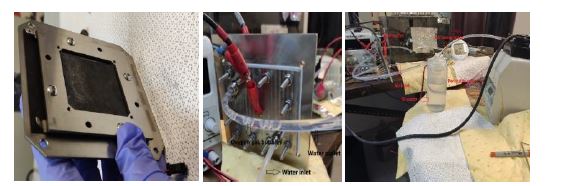
Figure 2: (a) Air-based system (b) liquid-based system (c) test setup

Figure 3: (a) Air-based system- no fan on the system vs fan on the cathode side. (b) Liquid-based system - Liquid pumped on the anode side and an air moving device on the cathode side. Water and a carbonate solution were tested as the pumped liquid, and a fan and a compressor were tested as the air moving device.
Summary/Accomplishments (Outputs/Outcomes):
Two different configurations were tested: a system in contact with air on both sides, air-based system, and a system with air one the cathode and liquid on the anode, a liquid-based system.
These systems are outlined in Figure 2. From initial rounds of testing, the performance of the air- based system was too low and Xergy moved forward optimizing the liquid-based system. The oxygen depletion rate of the air-based system was 0.12%/hr, whereas the liquid-based system was around 1%/hr, as shown in Figure 3.
The systems were initially designed with pumps, fans, and air compressors. After conducting a cost analysis, it was determined that to meet the cost metrics of the program ($5 - $15/unit) the air compressor and pump systems were not viable. A self-circulating liquid system without an air moving device on the cathode was tested to overcome the cost issue and is shown in Figure 4. The system was able to deplete oxygen at a rate of 0.6%/hr, which is less than the system equipped with a compressor and pump; the self-circulating system would need to be around 50cm2 to match the performance. However, eliminating the pump and air moving device outweighs the increase in cost from having a larger membrane active area.

The designs developed in this program were analyzed to determine the most viable route for commercialization for large scale food storage applications. All systems are analyzed using the PENTION™ ionomer, and all liquid-based systems using potassium carbonate. All systems were analyzed and scaled to 3% O2 reduction in 3 hours, except for liquid-based, self-circulating systems which reduced O2 levels by 3% in 1 hour. By increasing cell active area, oxygen reduction rates can be increased, and therefore the system can operate for shorter periods (and therefore provide longer overall system lifetime). The most important metrics from a commercialization standpoint are variable cost, size, noise, and expected lifetime (i.e. durability). For this analysis, the cost/area of the Membrane-Electrode-Assembly (MEA) was assumed to be linear, pumps were priced at $10.00/EA, and fans were priced at $2.00/EA. For the durability analysis, it is assumed that the system will be operated 2 times a day for 10 years long enough to achieve the desired O2 reduction levels. The analysis is outlined in Table 1.
Table 1: Analysis of program metrics for various system configurations
| Metric | Air-based w/0 fans | Liquid-based w/ compressor | Liquid-based w/fan | Liquid-based, self-circulating, durable | Liquid-Based, self-circulating, standard |
|---|---|---|---|---|---|
| Cost ($) | 76.13 | 23.98 | 16.48 | 15.71 | 6.92 |
| Active area (cm2) | 640 | 25 | 25 | 125 | 50 |
| Noise (dB) | 0 | 90 | 20 | 0 | 0 |
| Required Lifetime (hrs) | 21,900 | 21,900 | 21,900 | 7,300 | 21,900 |
Conclusions:
From Table 3, the air-based system has no noise, but cannot meet industry economic targets. The liquid-based system with an air-pump is the loudest during operation and exceeds cost targets. The liquid-based system with a fan is slightly above cost targets ($15/unit). The liquid-based self- circulating system design was able to meet the required inerting level within 3 hours and met the desired $5 limit cost target. However, because this system must operate for 3 hours a day to meet the O2 reduction goal, the lifetime requirements are higher than desired. There is a trade-off between system operating life demands and performance that needs to be further evaluated in Phase 2 of this program. System durability must be carefully measured and predicted with accuracy.

In Phase 2 of this program, we anticipate being able to improve system performance improvements further and thus reduce overall unit cost. For example, a 1.5x improvement in cell performance will allow the system to easily meet cost targets for mass integration into residential refrigerators ($5/unit). By identifying superior catalyst candidates and improving membrane conductivity, we believe cell performance can be improved dramatically. One other improvement that should be explored in Phase 2 involves the placement of a cell outside of the refrigerated space and applying small levels of heat via a resistive heater to improve cell kinetics. By simply heating the cell the performance of the system can be improved by an order of magnitude with consequent reduction in system footprint and cost. A comparison of system cost with the ratio of cell performance increase (i.e. 2x, 3x etc.) is provided in Figure 22.
Xergy is actively pursuing integration of the system into small containers for food preservation, preservation of artifacts like those in a museum, and food preservation during transportation. Each of these markets has different volume requirements and will need various modifications to the design from Phase 1. Phase 2 will include actively working with industry partners to design systems for larger volumes to broaden the commercial impact of electrochemical inerting via anion exchange membranes.
Xergy successfully met the program goals of the Phase 1 SBIR program, and has developed a low cost ($6.92), low noise (0dB), no maintenance (no moving parts or consumables) electrochemical inerting system to replace pressure swing absorption and membrane swing absorption systems for food preservation.
The perspectives, information and conclusions conveyed in research project abstracts, progress reports, final reports, journal abstracts and journal publications convey the viewpoints of the principal investigator and may not represent the views and policies of ORD and EPA. Conclusions drawn by the principal investigators have not been reviewed by the Agency.